
Poland: Expansion of Preschool Access
Summary
Context
In 2008, Poland had the lowest preschool access indicators in the European Union. Moreover, regional and local disparities in access to preschool services were severe and negatively impacted developmental inequalities among children at both the international and national levels.
This situation resulted from the post-socialist transition, during which preschool education was decentralised and transferred from the central government to local authorities. This shift, combined with economic restructuring and financial constraints at the municipal level, led to a substantial decline and stagnation in the number of preschools, particularly in rural areas.
Since the late 2000s, a combination of factors — including the European Union’s agenda and funding, NGO initiatives, growing public support, and increasing political commitment — has driven a number of significant reforms aimed at expanding access to early childhood education and care (ECEC) across the country, with a particular focus on underserved rural regions.
Reforms
Poland implemented a series of rolling policy changes to expand access to preschool education. This multifaceted reform, implemented between 2008 and 2017, gradually introduced several key measures:
- Diversification of preschool provision,
- A statutory guarantee of preschool places for all 3- to 6-year-olds
- An expansion of the number of preschool institutions and available places, and
- Improved affordability of early childhood education through the partial elimination of fees
Feedback on the Policy Cycle
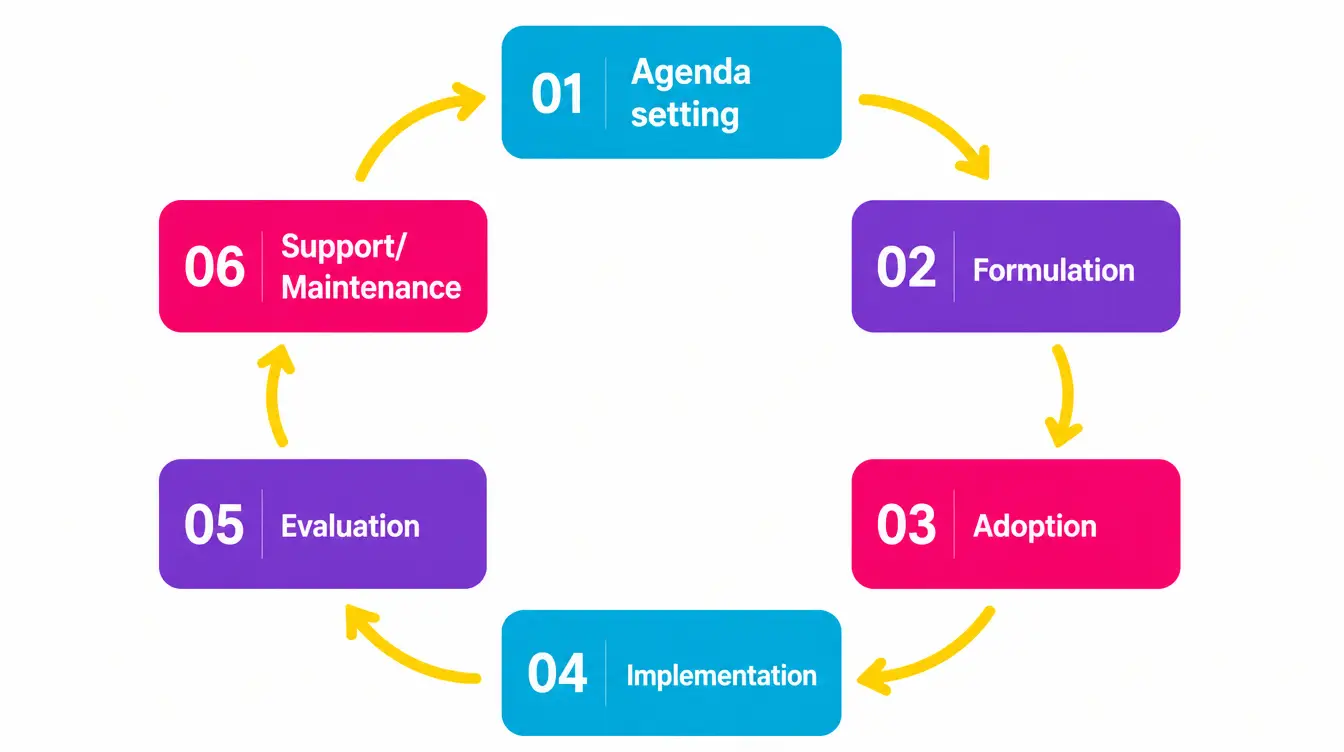
1. Agenda Setting
Problem
Low access to preschool education, with further inequalities at the regional and local levels (the northern, north-eastern, and eastern parts of Poland were less urbanised, with higher poverty and unemployment levels and lower preschool access).
Target groups
Children aged 3 to 6 across the country, with a particular focus on the most underserved rural regions.
Political context
Need to increase preschool access, initially driven by EU women’s employment activation agenda rather than by removing barriers for children (Lisbon strategy). With time, a universal preschool education was recognised as a key equalising measure for children’s academic achievement, particularly for those from socio-economically disadvantaged backgrounds, socially excluded communities, and with special educational needs.
Evidence base
Research shows that universal preschool participation from a young age has a positive impact on children’s socio-emotional development and educational outcomes. The third sector strongly promoted the benefits of ECEC, as it was a low political priority, especially at the beginning of the transformation period in the 90s and 2000s.
2. Formulation
Main measures
Gradual expansion of access to preschools for all 3- to 6-year-olds across the country
Legislative instruments
- Diversification of preschool provision (allowing for alternative organisational forms of kindergartens, both public and non-public; 2008)
- Five hours of free preschool provision plus subsidised (very) low cost of additional hours (since 2013)
- (Gradual) statutory guarantee of preschool place for every child aged 3-6 (between 2014 and 2017)
3. Adoption (empty)
See above
4. Implementation
Geographical scope
- Across the whole country, especially in underserved rural areas – gradual universal measures
- Target group and intake: 3 to 6-year-old children
Actions
- Development of the necessary infrastructure (building, expanding, and converting existing public facilities into preschools), mostly by the third sector in collaboration with local authorities – the availability of EU funding was a key enabler
- Growing support and understanding of the importance of ECEC amongst key stakeholders (local authorities, central government, public, media) and local communities, especially in rural areas
- ECEC became recognised as key on the local authorities’ agenda. As a result, municipalities decided to continue EU-funded, third-sector-led preschools using their own budgets and state subsidies. Such engagement of local authorities became an important step toward the sustainability of preschool education, especially in rural areas.
5. Evaluation
Missing evaluation
Lack of systemic, long-term evaluations of the reforms by the government and public institutions
Small-scale evaluations
Conducted by third sector, researchers or public institutions (often driven by the requirements for EU-funded projects):
- These evaluations showed diverse positive effects: on children’s development, wellbeing, educational outcomes and opportunities as well as on local rural and disadvantaged communities (revitalisation, intergenerational engagement, cohesion, employment opportunities, especially for women)
- The recruitment system also supported large and/or disadvantaged families. The guarantee of a place forced local governments to create additional preschool places (for example, they also organised temporary preschool preparatory classes in primary schools when there were not enough places available)
6. Support and Maintenance
Maintenance
The sustainability of ECEC provision was ensured by taking over EU-funded, third sector-led preschool provision by local authorities (using their own budgets and state subsidies)
Results
Access to ECEC has increased significantly over the years, from fewer than 300–500 children per 1,000 (depending on the region) in 2002 to nearly full coverage by 2023.
Current challenges:
- Rural-urban divide in access to ECEC and learning outcomes later in life
- Quality of ECEC provision
- Quality of ECEC curriculum
- Proliferation of elite preschools
- Ensuring inclusive preschool education
- Demographic changes and preschool closures
Insights
Success Stories
Click the markers to read the success stories.
Enablers, barriers and transfer options
- Availability of EU funding, aiming to ensure access to essential services, including free and effective early childhood education and care
- Third sector and local communities’ engagement in increasing access to ECEC, especially in rural and disadvantaged regions
- Public support for expansion of ECEC
- Political will to sustain access to ECEC for all children
- Availability of stable public funding
- Complexity of EU funding (short-term, bureaucracy, reporting)
- Education as a political battlefield: politically driven changes rather than grounded in evidence-based, holistic approaches to education
- High levels of bureaucracy and legislative challenges (state and local levels)
- Limited consultations with the key stakeholders across the policy cycle
- Lack of longitudinal data on ECEC impact on children’s educational outcomes and opportunities later in life
- Lack of systemic evaluation
The expansion of preschool access in Poland over the last two decades has been a non-linear and complex process shaped by multiple layers of influences and barriers. Analysis of the ECEC reforms expanding access to ECEC has shown that best results can be achieved when:
- Education policymaking is an area excluded from political rivalry
- Long-term planning and holistic thinking about education and educational stages is adopted, without sudden politically driven changes
- Secure public funding is available for diverse forms of ECEC
- Key stakeholders are consulted at every stage of the policy cycle
- Policies are allowed to settle, and their effects are evaluated in a systematic way – positive effects take time to become visible
- Evidence-based improvements to the policies are carried out based on these systemic evaluations