
1.1 Introduction
Inequality in educational outcomes is understood here as the unequal distribution of access, participation, and achievement in education – particularly early childhood education – across social, geographic, and economic dimensions. In the Polish context, regional disparities are especially significant due to long-standing differences in economic development, quality of life, and access to public services.
These inequalities manifest both between voivodships1 and between urban and rural areas. Place of residence is thus closely linked to socio-economic background, shaping family income, parental education, and occupational status.
The Early Childhood Education and Care (ECEC) reforms we examine comprise a series
of policy initiatives introduced between 2008 and 2016 aimed at improving access to preschool education. These measures focused on expanding the number of institutions and available places, as well as enhancing affordability by partially eliminating fees.
International and national evidence suggests that early childhood education positively impacts long-term cognitive and social outcomes. Therefore, expanded access may contribute to reducing educational disparities over time.
This report addresses the following research questions:
- To what extent have the implemented reforms improved access to ECEC in Poland?
- How has improved access affected educational outcomes?
- To what degree are regional inequalities in access and outcomes connected to place of residence?
Educational outcomes at ISCED level 2 (lower secondary education) are measured using the results of the eighth-grade (E8) exam, introduced in 2019, which marks the completion of this level and assesses students in Polish language, mathematics, and a foreign language. These results are essential for admission to upper secondary schools.
The analysis draws on publicly available data from the Central Statistical Office / Statistics Poland, the Central Examination Commission (CEC)2, and regional examination boards. The dataset covers the years 2019–2024 and includes aggregated exam results at the voivodship (województwo) and county (powiat) levels.
Additional regional data on education infrastructure, such as preschool enrolment rates per 1,000 children and the number of children per preschool place, are also used.
The structure of the report is as follows: First, we present the Polish context to explain why regional inequality is a critical concern and introduce the educational reforms under study. We then review relevant literature and outline the methodology and research questions.
This is followed by quantitative analyses consisting of two parts: an examination of regional changes in preschool access from 2003 to 2023, and an analysis of how preschool availability relates to E8 exam performance.
The following section presents qualitative findings based on expert interviews and media discourse analysis. This section offers both a general, nationwide overview of reform outcomes and a focused case study of Podkarpackie voivodeship in southeastern Poland and Lubelskie voivodeship (eastern Poland).
The report concludes with a synthesis of findings, highlighting key patterns and implications for educational policy aimed at reducing territorial inequalities.
1.2 National Context
Following the 1989 socio-political transformation, Poland’s education system underwent profound restructuring.
A significant reform decentralised preschool education, transferring responsibility from the central state to local governments. This shift, combined with economic restructuring and fiscal constraints at the municipal level, precipitated a substantial decline in the number of preschools, particularly in rural areas.
Consequently, access to early childhood education was severely restricted, exacerbating existing social inequalities. During the communist era, centrally planned policies ensured widespread availability of preschools and nurseries. The post-socialist transition, however, entailed a withdrawal of the state from its social obligations, compelling financially constrained municipalities to prioritise compulsory primary education over early childhood provision.
This period was characterised by a significant reduction in institutional childcare availability; however, non-governmental organisations and civil society partially compensated for this withdrawal.
The emergence of non-public preschools mitigated some access issues but also contributed to socio-economic stratification, as private institutions often catered to families seeking enhanced educational opportunities and improved school readiness.
Statistically, ECEC provision declined sharply: the number of preschool institutions decreased from approximately 24,000 in 1989 to 14,000 in the 1990s, while the number of crèches fell from around 8,000 in 1990 to 400 by 2005.
Moreover, these shortages displayed a clear regional pattern, stemming from historical conditions and the uneven development of different parts of the country during the communist era and the early years of the post-1989 systemic transformation.
Using regional unemployment rates and extreme poverty thresholds as examples, we can observe that although the overall situation improved significantly across the country over the years (particularly since joining the European Union in 2004, when high unemployment levels were primarily a result of the prolonged economic transition), regional disparities persist.
The northern, north-eastern, and eastern parts of Poland have remained less urbanised, with predominantly rural areas. Only some counties and coastal zones that benefit from specific tourism-related advantages (e.g. in the Warmińsko-Mazurskie voivodeship) have seen notable improvements. Overall, however, these areas continue to lag behind other regions in terms of employment opportunities and poverty combating (see Figs. 2.1 and 2.2).
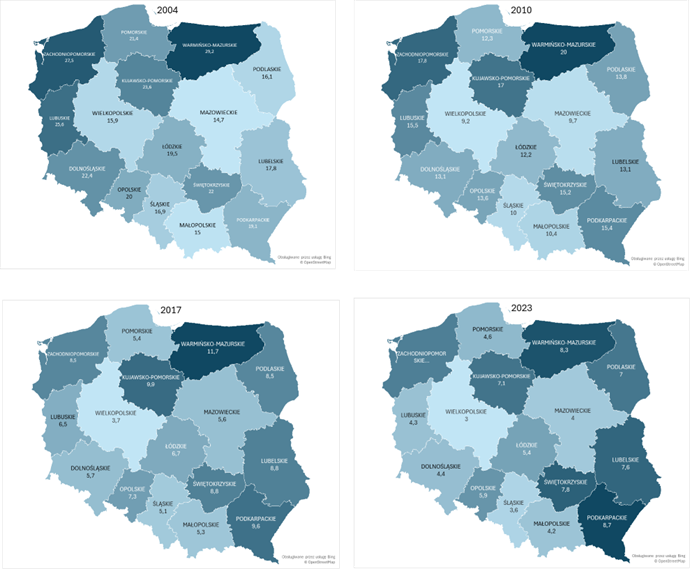
Fig 1.1 Unemployment rates in 2004, 2010, 2017 and 2023 by voivodeship
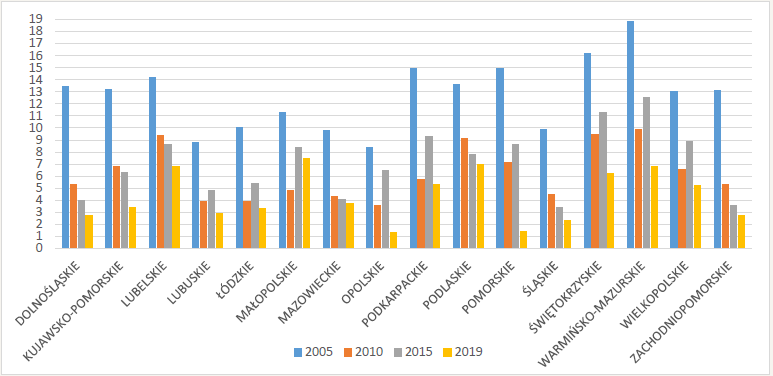
Fig 1.2 Extreme poverty3 threshold in 2005, 2010, 2015 and 2019 by voivodeship
The political interventions analysed in this report constitute a rolling series of policy changes aimed at expanding access to early childhood education in Poland, implemented incrementally between approximately 2008 and 2017. This multifaceted reform introduced several key measures. It should, however, be noted that this sequence did not constitute a planned, coherent programme of reforms but rather unfolded amid shifting political landscapes. Although each governing party had professed concern for ECEC (Early Childhood Education and Care) and a commitment to reducing inequalities, some measures were mutually contradictory, and the 2016 reform, which increased the compulsory school age, rescinded part of the earlier decisions.
In 2008, legislative changes laid the foundation for a diversified system of preschool provision, allowing for the emergence of organisational models beyond traditional kindergartens. Then the financing structure was significantly reformed through the introduction of partial national subsidisation, which included a mandate for five hours of free preschool education per day in public institutions.
Subsequent legislative reforms from 2015 aimed to expand universal access, resulting in a statutory guarantee of preschool places for all six-year-olds and, upon request, for four- and five-year-olds.
In September 2017, this entitlement was extended to all three-year-olds. Parallel to these structural and access-oriented reforms, the preschool curriculum was revised to enhance educational quality and promote consistency across diverse types of providers. Detailed information on these interventions is provided in Table 1.1
Table 1.1: Key Reforms in Preschool Education in Poland (2008–2017)
| Year | Reform Action |
| 2008 | Legislative changes enabled the diversification of preschool provision, allowing for the development of alternative organisational forms beyond traditional kindergartens. |
| 2008 (effective 2009) | Reform of the preschool core curriculum in Poland, aimed at improving quality and ensuring consistency across different types of providers. Key goals included aligning public and non-public preschool programs, enhancing school readiness, emphasising practical and social skills, and implementing a more child-centred approach. The reform was part of broader changes initiated by the Ministry of National Education to align with the EU standards and international assessments (e.g., PISA, PIRLS). The curriculum was later updated in 2017 and again in 2023 to reflect evolving pedagogical approaches and societal needs. |
| 2013 | Introduction of partial national-level subsidisation of preschool education. Public kindergartens were required to offer five hours of free provision per day. Local authorities covered the cost of additional hours within nationally regulated limits (1 PLN), easing the financial burden on families. |
| 2015 | Legislative reforms were initiated to promote universal access to early childhood education and care (ECEC). |
| 2016 | Statutory guarantee of preschool placement for all six-year-old children and for four- and five-year-olds upon parental request. |
| 2017 | Entitlement extended to include all three-year-olds, marking a significant expansion in the target age group for preschool provision. |
Additional information about table 1.1
The Quality Leap (2008-2009): Poland’s reform journey started not just with infrastructure, but with quality. The core curriculum reform was heavily driven by international pressure and a desire to perform better in cross-national assessments like PISA and PIRLS.
The Financial Turning Point (2013): The 1 PLN per hour cap (after the first 5 free hours) was a game-changer for equity, making preschool affordable for lower-income families and boosting maternal labor supply.
The Universal Escalator (2015-2017): Poland chose a stepped approach to universalism, legally securing places for the oldest children first (6-year-olds) before cascading the right down to the 3-year-olds in 2017.
It is noteworthy that all ECEC interventions, including those lowering the school-entry age (introduced in 2014 and subsequently reversed in 2016), assumed that ECEC has equalising and/or compensatory effects (as is also grounded in research, e.g. McGinnity et al. 2017; Kluczniok et al. 2017; Cebolla-Boado et al. 2017; Jopkiewicz et al. 2020) and that guaranteeing access to places would simultaneously reduce inequalities in children’s achievements.
The expectation was that accessible and early education would help reduce disparities resulting from limited access to other forms of education and support (urban–rural divide) and differences in parental support (socio-economic background; Dobosz-Leszczyńska 2024).
Children would be better prepared for school and achieve higher outcomes. However, due to the strong public support for preschool education in Poland, this was not the main argument for the reform.
More attention was given to the potential to make it easier for women to return to the labour market if childcare were available — a point evident in expert narratives and discussed further in the qualitative part of the report. Moreover, due to significant accessibility deficits over an extended period, the situation was primarily analysed in terms of the availability and accessibility of ECEC across different social groups (Fedorowicz and Sitek 2011).
Nonetheless, the substantial involvement of the private sector prevented the establishment of a truly universal ECEC system; nationwide, the share of private preschools increased from 5.5% in 2003 to 27.5% in 2023. Non-public providers enjoyed the latitude to design highly varied programmes – extending well beyond the national core curriculum framework – thereby engendering a degree of elitisation in preschool services. In principle, every child could gain access in terms of place accessibility and financial costs, but in practice, significant disparities persisted across institutions by type.
1.3 Literature Review
During the transition period and the first decade of the 21st century, due to the insufficient supply of institutional childcare services for preschool-aged children (Ciepielewska-Kowalik 2020; Levitas and Herczyński 2002; Sadura 2016) and the prevailing belief about the mainly care function of the preschool, a familial model of care predominated in Poland (e.g. Kotowska et al. 2007; Szelewa and Polakowski 2008).
Moreover, the significantly lower rate of preschool education enrolment in Poland compared to other EU countries, as well as the pronounced regional and local disparities in access to preschool services, contributed to both inter-country and intra-national deepening of developmental inequalities among children.
This was particularly problematic for children from families of lower socio-economic, cultural, and educational status, as well as those living in socially and economically disadvantaged areas. It should be noted that, after 1989, the family’s low social, economic, and cultural status more strongly limited children’s educational opportunities than in previous decades.
This was because during the period of systemic transformation, education became the primary determinant of individuals’ socio-economic position and economic success (Górniak 2007; Jarosz 2011).
In such a context, equal opportunity, of which a universal preschool education system was a key component, offered the potential for children’s social advancement. At the same time, however, as noted in the previous section, these opportunities were significantly limited during the post-transformation period (Heinen and Wator 2006).
Findings from Polish studies (e.g., Giza 2010; Putkiewicz 2000) confirmed international research, demonstrating that preschool programs had a clearly positive impact on children’s academic achievement, particularly for those from socio-economically disadvantaged backgrounds, socially excluded communities, and children with special educational needs.
This was particularly significant in the context of the ‘juvenilisation’4 of poverty in Poland (Tarkowska 2005). The fundamental challenge of the reforms thus became increasing the availability of preschool institutions—not only in terms of the number of places, but also in terms of financial accessibility and, ultimately, a shift in public awareness.4
The initial series of reforms introducing the possibility of diversifying preschool education and obtaining financial support from EU programs led to an increase in the share of non-public institutions, thereby building a system of shared responsibility. In 2005, foundations, associations, and other social organisations operated 5.6% of preschools, serving 3.7% of children enrolled in preschool education.
By 2013, they accounted for 8% of preschools, attended by 4.9% of children enrolled in the preschool education system. The growing diversity of preschool service providers is particularly evident in the unprecedented development of alternative forms of preschool education between 2008 and 2013. In 2013, the public sector was the governing body for just over one-third (32.2%) of these alternative preschool forms, while nearly two-thirds were operated by the private sector – commercial entities (42.5%) and social organisations (25.3%).
At the same time, NGOs were often excluded from discussions about the methods and directions of reforms in preschool care and education policy (e.g., regarding the organisation and financing of preschools), and their role was not prominently highlighted in reporting on progress in efforts to increase access to preschool education.
Admittedly, preschool education after 1989 serves as an example of public policy in which the role of citizens in planning, programming, and shaping services was declaratively intended to increase; however, at the state level, their role was understood exclusively in a consultative and advisory capacity (Ciepielewska-Kowalik 2014).
The insufficient recognition of social organisations stemmed from an excessive focus on the economic dimension of social sector reforms – the input side of the welfare state. Financial calculations (such as the ratio of institutions to children or per capita costs) became central.
At the same time, issues related to the implementation of public policies – the output side of the welfare state – were largely overlooked. In this area, the core concerns encompassed the quality of services and teachers’ training (Pestoff 2009; Leś 2011).
Similarly, the economic dimension and infrastructural challenges dominated the discourse during the subsequent reforms, whilst a second focal point was the debate over reversing the lowered school-entry age to six and the obligation of a preparatory year for five-year-olds (the mandate remained but applied to six-year-olds again).
The curricular changes introduced alongside the guarantee of places for younger children were discussed primarily through the lens of ideological discourse and the conservative-right government’s vision of education (Klus-Stańska 2017; Kaźmierczyk 2017).
1.4 Research Questions
Our research questions are as follows:
- To what extent have the implemented reforms improved access to ECEC in Poland?
- How has improved access affected educational outcomes?
- To what degree are regional inequalities in access and outcomes connected to place of residence?
1.5 Methodology
We adopted a mixed-methods research design consisting of:
- Quantitative analysis of the impact of ECEC reform on expanding access to preschool education, improving educational outcomes and reducing regional disparities
- Qualitative analysis of the multidimensional influences on, barriers to and broadly
understood effectiveness of ECEC reform in Poland, through media analysis and interviews with the key stakeholders.
1.5.1 Research design
Quantitative methods
It needs to be highlighted that after reviewing potential data sources, it became evident that longitudinal studies covering the scope of our research are lacking in the Polish context.
Moreover, existing data tend to focus primarily on school performance at various educational stages and are either not representative or overly individualised (e.g., diagnoses of individual students available to teachers as part of school-based research).
Consequently, there is also a scarcity of research examining the direct impact of ECEC on later educational outcomes.
Given this limitation, we utilised data from the Polish Central Statistical Office / Statistics Poland to analyse the expansion of access to ECEC and the effects of reforms on reducing regional disparities and fostering socio-economic development and to estimate the impact of preschool availability on educational outcomes.
We subsequently related these data to the results of the E8 exam to assess whether improvements in ECEC provision at the regional level correspond with enhanced exam outcomes. The eighth-grade exam results are significant for students’ future educational trajectories, accounting for 50% of the points
used for admission to secondary schools of choice. Whilst they are a requirement for completing primary education, a student cannot fail the exam; mere attendance is enough for it to be recorded as completed. However, due to its selective significance, the results achieved are highly important and are widely discussed in the public sphere every year. In the following sections of the report, we will divide the data into thresholds for this reason.
Qualitative methods
The qualitative component of the research design, in turn, consisting of interviews with the key stakeholders and media content analysis, aims to broaden our understanding of the ECEC reform in Poland, especially in relation to the process of reform’s design, implementation and evaluation, core influences and challenges faced and the degree of its effectiveness (defined broadly).
Media analysis
Data sources selected for media analysis included three national newspapers from across the political spectrum: Gazeta Wyborcza (left), Rzeczpospolita (centre), and Nasz Dziennik (right/catholic/conservative), and two tabloids, Fakt and Super Express.
One hundred fifty-five news articles relating to various aspects of the ECEC reform between 2007 and 2021, with a particular focus on the years 2011 and 2018, were identified by searching newspaper archives (combined with Google and/or Bing searches), and 40 articles were chosen for subsequent thematic analysis.
Interviews
We conducted four in-depth, semi-structured interviews with key stakeholders involved in the design, implementation and/or evaluation of ECEC in Poland:
- A director of the NGO actively involved in promoting and rolling out initiatives in increasing access to pre-school education in rural areas/disadvantaged regions in Poland (2004-2020s; Interviewee 1)
- ECEC teacher and a local activist for 20 years, involved in activities aiming at increasing access to preschool education in one of the most disadvantaged/marginalised regions in Poland (Podkarpackie voivodeship; Interviewee 2)
- Head of a small rural local authority in another disadvantaged region involved for 15 plus years in increasing access to pre-school education (local authority/voivodeship perspective – Lubelskie voivodeship – one of the poorest regions in Poland, Interviewee 3)
- Researcher in educational policy/ECEC policy and education governance; a long-term collaborator with the coalitions of NGOs involved in increasing access and quality of ECEC; conducted extensive research on the preschool reform, including small-scale evaluations (Interviewee 4).
The four interviewees were selected purposively based on their long-standing and diverse involvement in ECEC policy and practice in Poland.
Each represented a different perspective: an NGO director with extensive experience in national and local initiatives, a local activist and teacher from one of the most disadvantaged regions, a head of a rural local authority in a low-income voivodeship, and a researcher specialising in ECEC policy and governance with a history of collaboration with NGOs and public institutions.
This selection ensured access to contextually grounded insights from actors directly engaged in shaping and implementing ECEC reforms. While the sample does not aim for statistical representativeness, it was designed to capture a range of viewpoints across sectors and regions.
1.5.2 Data Analysis
Quantitative analysis
Non-longitudinal data from the Central Examination Commission and the regional examination boards that conduct the six-grade and now, eighth-grade exams are nationwide and publicly available at the county and voivodeship levels. The data is for the years 2002-2016 (6-grade exam) and 2019-2024 (8-grade exam), consecutive years (13- and 15-year-olds, respectively).
We combined the above data with administrative data on education by region – number of pre-schools, number of children enrolled/ 1000 children of a given age, and data for control variables: economic situation by region, unemployment level, and poverty level.
Qualitative analysis
Media analysis
The content of the news articles was first coded in MaxQda; approximately 30 codes were generated inductively from the collected content. The codes were then organised into broader themes and patterns of meaning across the dataset in relation to our research question (Braun and Clarke 2013).
Theme identification was informed by a critical perspective, drawing on Coffey and Atkinson’s (1996) notion of theorising as a means to interrogate underlying power relations and ideological assumptions embedded in media discourses.
This approach enabled us to develop broader socio-political interpretations and explanations of media coverage of ECEC and its effectiveness in the Polish context between 2008 and 2021.
Interviews
The interviews sought to elicit knowledge, experience, and opinions from experts in the field of creating, designing, implementing, and/or evaluating ECEC reform in Poland during the post-transformation period. Questions revolved around interviewees’ involvement and perceptions of the process of increasing access to ECEC education and reducing educational inequalities due to place of residence or social origin, any positive changes observed (broadly understood), barriers/challenges faced (over the last 20 years), and recommendations for the future.
Interviews lasted between 2 and 3 hours and provided significant insights into the ECEC reform, especially by offering more local perspectives and highlighting the role of key non-state actors in the process. A thematic analysis was adopted to analyse interview data and cross-reference themes with those identified during media analysis.
An overall analysis of media content, combined with interviews with key stakeholders, desk research, and ECEC policy analysis, enabled authors to develop a multilevel model of interdependent influences on and barriers/challenges to ECEC reforms in Poland.
1.6 Results
1.6.1 Quantitative results
In line with the research questions, quantitative analysis is divided into two parts.
The first part is based on data from Statistics Poland (Central Statistical Office) for the years 2002/2003–2023 and concerns the availability of preschool facilities, which was the primary objective of the reforms discussed in our report.
The second part of the analysis focuses on the results of the final examination administered at the end of primary education: the eighth-grade exam, introduced in 2019 following a structural reform of the Polish education system.
This reform extended primary education to eight years, abolished the lower secondary level (gimnazjum), and reinstated the four-year upper secondary school (five years for technical upper secondary schools).
As mentioned in previous sections, at the turn of the 21st century, Poland faced a significant shortage of places in public preschools. This deficit could only be partially compensated for by non-public institutions.
In the first step of reforms, the state subsidy for ECEC was introduced, and the preschool education framework was made more flexible. Combined with financial support from European funds, this led to an increase in the number of newly established preschool institutions, both public and non-public, which consequently expanded the availability of preschool places and reduced the number of children per place.
The latter included facilities run by NGOs, churches and religious organisations, as well as private individuals. The increase in the number of preschool institutions occurred across all regions, though unevenly.
It is also important to note that while in regions where such facilities were previously scarce, this growth represents a substantial improvement, reaching what can be considered a basic level of provision (from no access to at least some access).
In turn, in regions already in a more favourable position, it has brought additional benefits. These include a greater degree of choice for parents and the possibility of establishing specialised institutions, such as those better suited to the needs of children with special educational needs.
Similarly, the number of children enrolled in preschool institutions increased steadily alongside the growth in facilities.
The next step in the reform process was to ensure financial accessibility by significantly reducing costs, primarily through the provision of five hours of free preschool education and a very low, centrally regulated fee for any additional hours.
Some municipalities also subsidised meals to reduce this expense or permitted institutions that did not provide meals to allow children to bring food from home.
Then, priority criteria were introduced in the enrolment process for children from large families, single-parent households, families at risk of social exclusion, and children with disabilities.
The third step was to guarantee access to preschool places for all children whose parents wished to enrol them. This was implemented gradually, beginning with five-year-olds and extending down to three-year-olds, while maintaining the compulsory nature of the final year of preschool education for six-year-olds.
When we examine these data in terms of the number of children enrolled in preschools per 1,000 children of the relevant age group, we observe a clear and substantial improvement. Preschool availability increased significantly, from fewer than 300–500 children per 1,000 (depending on the region) in 2002 to nearly full coverage by 2023 (see Fig. 1.3).
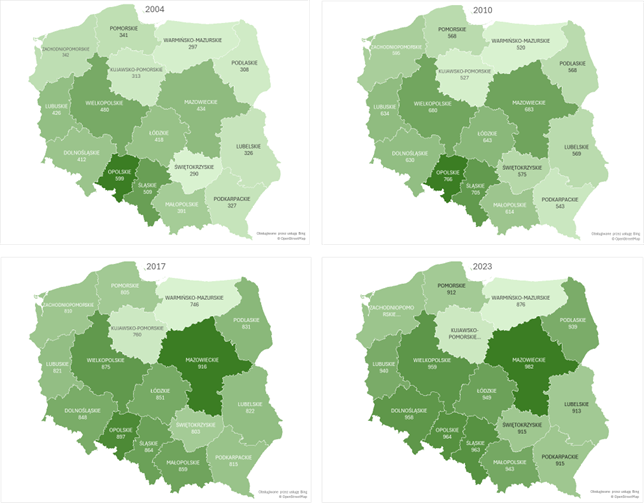
Fig. 1.3: Number of children enrolled in preschools per 1,000 children (in the years 2004, 2010, 2017, and 2023. Source: Own calculations based on data from Statistics Poland.
An analysis of the number of children per available preschool place reveals a gradual improvement over the years (see Fig. 1.4). By around 2018 – in line with the objectives of the final stage of the reforms analysed in this report – the situation had reached a point where it became possible to find a place for every child across the country.
However, it is important to note that this does not necessarily mean placement in a preferred or nearby institution; in some cases, it involves the inconvenience of transporting children to more distant facilities.

Fig. 1.4: Number of children per preschool place 2003-2018
At the same time, clear regional disparities in preschool access remain visible. To highlight the persistent inequalities despite overall improvements, the voivodeships were categorised into accessibility clusters (3). The classification was based on two indicators describing access to kindergartens: the number of children attending kindergartens per 1,000 children aged 3–5, and the number of children per available place in a kindergarten. The k-means clustering method was applied to identify clusters, allowing grouping of voivodeships based on the similarity of these indicators.
The following thresholds were established:
- High accessibility: more than 950 children per 1,000 children and fewer than 1.10 children per place,
- Medium accessibility: 900 to 950 children per 1,000 children and 1.10 to 1.25 children per place,
- Low accessibility: fewer than 900 children per 1,000 children and more than 1.25 children per place.
Statistical test results for the number of children attending kindergartens per 1,000 children aged 3–5 indicated that the mean in the high-accessibility cluster was approximately 967, while in the low-accessibility cluster it was about 922. The Student’s t-test yielded t ≈ 4.21 with p < 0.001, indicating significant differences between these clusters.
Regarding the number of children per kindergarten place, the mean was approximately 0.98 in the high-accessibility cluster and around 1.29 in the low-accessibility cluster. The Student’s t-test gave t ≈ -5.02 with p < 0.001, further confirming statistically significant differences.
Analysis of variance (ANOVA), considering all three clusters, confirmed the significance of differences for both indicators: for children per 1,000 children F ≈ 16.8, p < 0.0001, and for children per place F ≈ 14.5, p < 0.0001.
Table 1.2: Preschool Accessibility and Capacity Across Polish Voivodeships (2019 vs. 2023)
Comprehensive comparison of enrollment rates (children per 1000), seat pressure (children per place), and accessibility clusters.
| Voivodeship | Children per 1000 (2019) | Children per place (2019) | Accessibility cluster (2019) | Children per 1000 (2023) | Children per place (2023) | Accessibility cluster (2023) |
| Dolnośląskie | 892 | 0.85 | Medium | 958 | 1.07 | High |
| Kujawsko-Pomorskie | 820 | 0.99 | Low | 885 | 0.99 | Low |
| Lubelskie | 854 | 1.01 | Low | 913 | 1.27 | Low |
| Lubuskie | 874 | 0.89 | Medium | 940 | 0.89 | Medium |
| Łódzkie | 884 | 0.90 | Medium | 949 | 0.90 | Medium |
| Małopolskie | 897 | 0.88 | Medium | 943 | 1.11 | Medium |
| Mazowieckie | 935 | 0.84 | Medium | 982 | 1.04 | High |
| Opolskie | 916 | 0.79 | High | 964 | 0.79 | High |
| Podkarpackie | 862 | 0.95 | Medium | 915 | 0.95 | Medium |
| Podlaskie | 879 | 0.98 | Low | 939 | 1.27 | Low |
| Pomorskie | 849 | 0.98 | Medium | 912 | 1.24 | Medium |
| Śląskie | 901 | 0.81 | Medium | 963 | 0.84 | High |
| Świętokrzyskie | 852 | 0.99 | Low | 915 | 1.32 | Low |
| Warmińsko-Mazurskie | 811 | 1.00 | Low | 876 | 1.00 | Low |
| Wielkopolskie | 903 | 0.83 | Medium | 959 | 1.05 | Medium |
| Zachodniopomorski | 859 | 0.97 | Medium | 917 | 0.97 | Medium |
Table. 1.2: Voivodeships by accessibility clusters in 2019 and 2023. Source: Own calculations based on data from Statistics Poland5
Key Insights & Contextual Notes
- Universal Increase in Enrollment: Between 2019 and 2023, every single one of the 16 voivodeships saw an increase in the number of children enrolled per 1,000. This demonstrates the nationwide impact of extending preschool entitlements down to 3-year-olds.
- The “High Accessibility” Leaders: Dolnośląskie, Mazowieckie, and Śląskie all successfully migrated from “Medium” to “High” accessibility by 2023, joining Opolskie, which maintained its top-tier status.
- The Infrastructure Squeeze (Capacity Pressure): The expansion has put structural pressure on physical capacity. In Dolnośląskie (1.07), Mazowieckie (1.04), and Wielkopolskie (1.05), the ratio has crossed 1.0. The most extreme capacity pressure is found in Świętokrzyskie, jumping from 0.99 to 1.32 children per place, indicating a severe shortage of physical preschool slots despite being in the “Low” enrollment cluster.
The analysis of changes over the years 2019–2023 confirmed a general improvement in accessibility and shifts toward higher clusters6. Between 2019 and 2023, preschool accessibility in Poland improved significantly, yet the pace of change varied across regions. Voivodeships such as Mazowieckie and Śląskie recorded the most notable progress, moving from medium to high-accessibility clusters.
This shift reflects substantial gains in both the number of children enrolled per 1,000 and the ratio of children per available place, bringing these regions close to universal coverage.
Małopolskie voivodeship also improved, but its position remained within the medium cluster, indicating a slower rate of change compared to the leading regions. Similarly, Pomorskie continued to occupy the medium cluster. Despite some progress, its indicator of children per place remains close to the threshold for low accessibility, suggesting persistent structural challenges.
In contrast, Lubelskie and Warmińsko-Mazurskie voivodeships remained in the low-accessibility cluster, with only minor improvements over the period. These voivodeships illustrate enduring barriers, particularly in rural areas, where demographic and infrastructural constraints limit the effectiveness of reforms.
Overall, the analysis confirms that nationwide inequalities in access to early childhood education have narrowed. However, significant gaps remain between highly urbanised and predominantly rural regions, pointing to the need for targeted interventions to ensure equitable access across all areas.
Moreover, it is essential to consider the heterogeneity of preschool institutions themselves: factors such as distance from home, the availability of parental choice, and the quality of education and care provided. Below we present a chart showing the share of private kindergartens in the total number of facilities in selected, diverse voivodeships (Fig. 1.5).
The selection includes two voivodeships from each accessibility cluster – high, medium, and low – to illustrate differences across the spectrum of preschool availability. It is worth noting that the regions with the highest and lowest shares also correspond to the availability mentioned above.
The highest share of private kindergartens is in the Mazowieckie voivodeship (which includes Warsaw) – 32.5% in 2023 – and the lowest is in the Warmińsko-Mazurskie voivodeship – 19.0%. In the second part of this section, we point out that this also translates into differences in eighth-grade exam results.
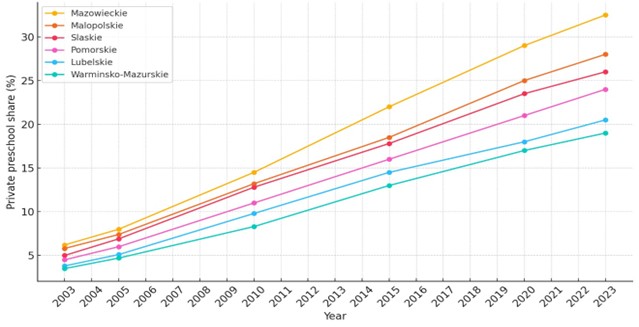
Fig. 1.5: Share of private kindergartens in the total number of facilities in selected voivodeships (2003–2023). Source: Own calculations based on data from Statistics Poland.
Impact of the preschool accessibility on educational outcomes
Equally important is the question of the long-term impact of ECEC on children’s later educational outcomes. Below, we analyse the results of the eighth-grade exams (E8), which have been administered since 2019. This means that the students taking the exam in 2019, 2020, and 2021 had already benefited, at least partially, and in some cases fully, from the increased availability of preschool education, both in terms of access to places and financial affordability.
Unfortunately, it is not possible to compare these results with earlier cohorts because the previously administered sixth-grade exam (E6) took place earlier and was based on different assumptions.
The existence of two different types of exams during the analysed period, their political dimension (as exam results are often interpreted in public discourse as evidence supporting or questioning the effectiveness of government education policies), and the various changes introduced in curricula, implementation conditions, and exam tasks all contribute to the complexity of interpreting these outcomes.
For instance, in the two years following the COVID-19 pandemic, exam requirements were somewhat simplified in response to the extended school closures and shift to online learning.
Additionally, the Central Examination Commission publishes sample tests, which may influence student preparation and performance. Interpretation is further complicated by the fact that many factors beyond preschool attendance affect exam results, ranging from a family’s cultural capital to differences in the quality of education offered by individual schools, as well as participation in extracurricular activities.
Notably, the consistently higher scores in foreign language exams, most commonly English, are often attributed to the widespread popularity of private, paid language courses outside the regular school system.
Nevertheless, regardless of whether national average results fluctuate slightly up or down each year, regional disparities remain evident. The eighth-grade exam is not a formal requirement for completing primary school; therefore, it cannot be failed in the conventional sense. However, it serves as an important selection mechanism for further stages of education, accounting for 50% of the total points in the recruitment process to secondary schools.
For the purposes of this analysis, voivodeships and counties were categorised into clusters based on average eighth-grade exam results from the years 2019–2024. The thresholds for each cluster are summarised in the table below:

To enhance the clarity of the analysis, we introduced a clustering approach that integrates both disparities in access to preschool education (A) and eighth-grade exam outcomes (O). This allowed us to generate combined categories that classify voivodeships and counties into High-OA, Medium-OA, or Low-OA levels for both educational outcomes and access.
The resulting categories are as follows:
High-OA level:
- voivodeships: Mazowieckie, Małopolskie
- counties: bielski (Śląskie), grodziski (Mazowieckie)
Medium-OA level:
- voivodeships: Śląskie, Pomorskie
- counties: Cracow (Małopolskie), Poznań (Wielkopolskie)
Low-OA level:
- voivodeships: Lubelskie, Podlaskie, Warmińsko-Mazurskie
- counties: lubelski (Lubelskie), suwalski (Podlaskie)
To provide a broader perspective, we present below the exam results for these voivodeships vs. national average across the three exam subjects: Polish language, mathematics, and a foreign language (Fig. 1.6, 1.7. 1.8). While results for some voivodeships fluctuate over time, we observe a consistent presence of both high and low performers.
This indicates that significant regional disparities persist. Notably, the year 2022 marks a visible shift in the trend, which may be linked to the prolonged school closures during the Covid-19 pandemic. These closures disrupted regular learning processes, limited access to in-person instruction, and amplified existing inequalities related to digital resources and home learning environments, all of which could have negatively impacted student performance.
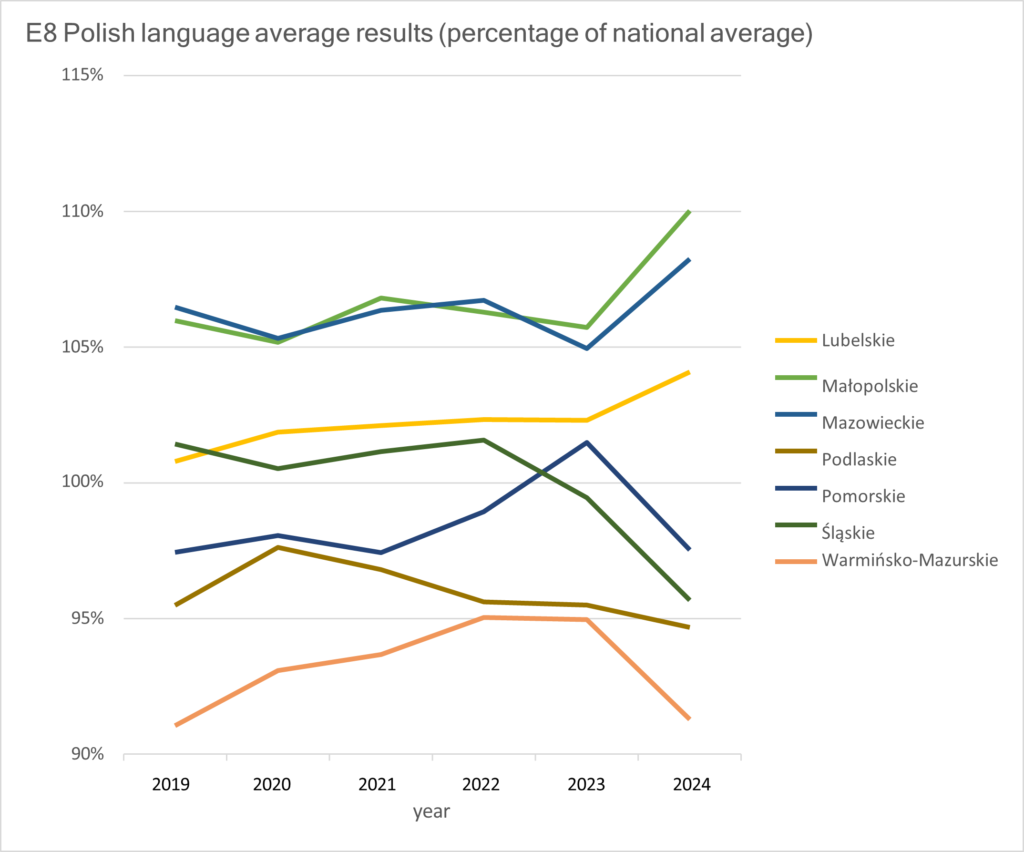
Fig 1.6: E8 Polish language average results (percentage of national average). Source: Own calculations based on data from the Central Examination Commission.
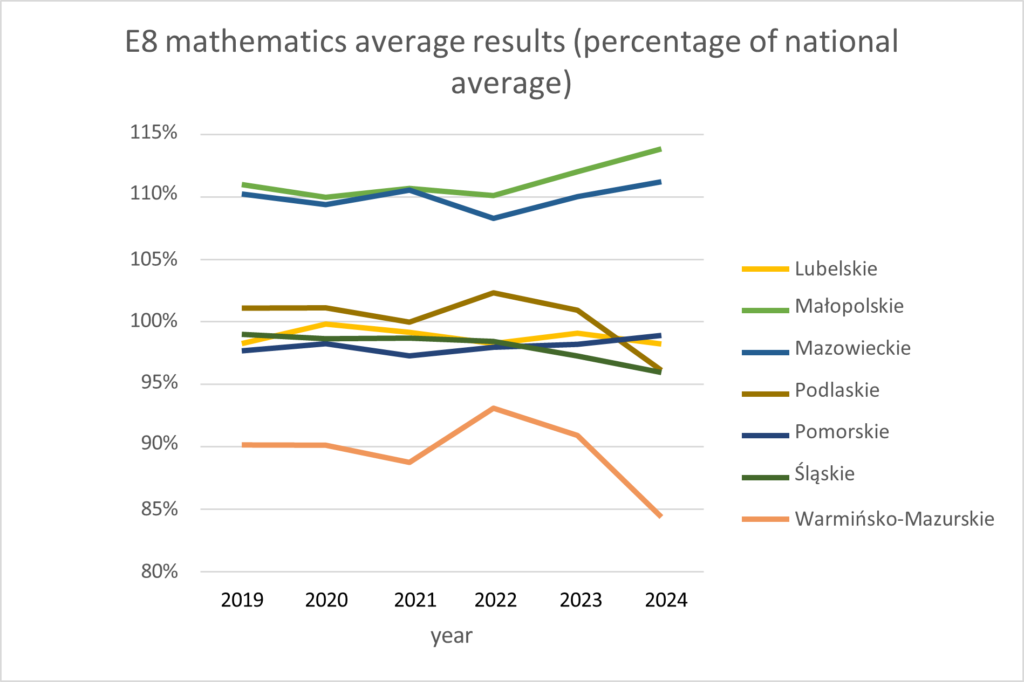
Fig 1.7: E8 mathematics average results (percentage of national average). Source: Own calculations based on data from the Central Examination Commission.
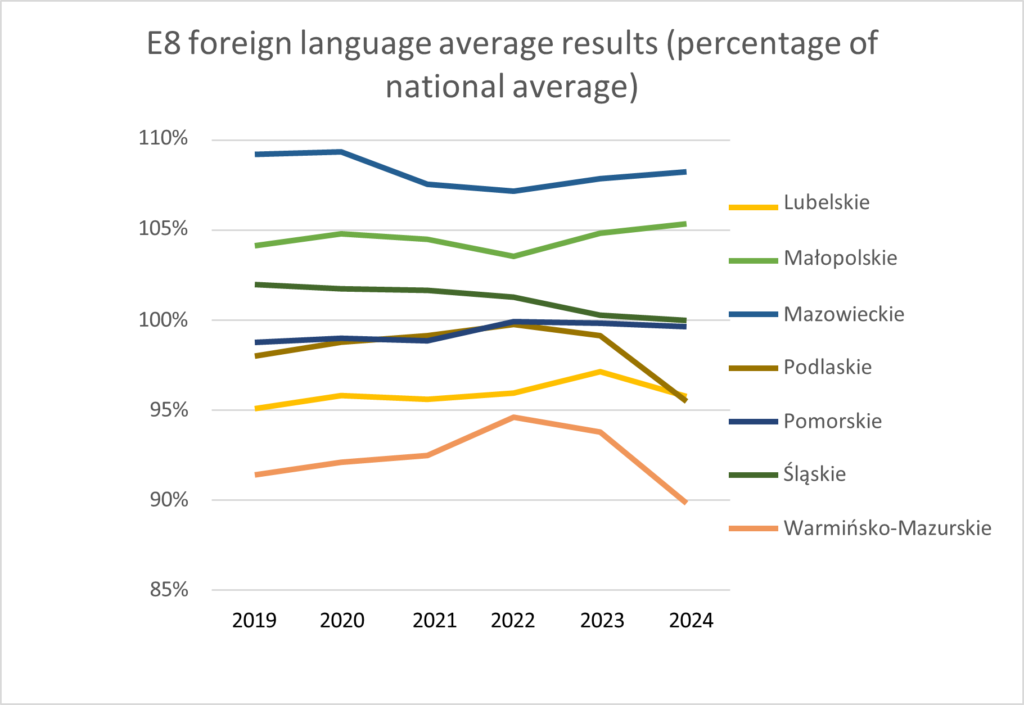
Fig 1.8: E8 foreign language average results (percentage of national average). Source: Own calculations based on data from the Central Examination Commission.
Students from the Mazowieckie voivodeship (which includes Warsaw, the capital) and the Małopolskie voivodeship (with Cracow as another major urban centre) continue to perform significantly better than their peers in other regions.
At the opposite end of the spectrum are the voivodeships that, in some cases, had weaker initial conditions in terms of ECEC availability, though this is not a universal rule. In the case of Polish language exam results, the lowest-performing regions include the Warmińsko-Mazurskie and Podlaskie voivodeships. For mathematics, the lowest scores are observed in the Warmińsko-Mazurskie and Śląskie voivodeships.
In the foreign language component (mostly English), the Warmińsko-Mazurskie, Lubelskie and Podlaskie voivodeships consistently record the weakest results. The Warmińsko-Mazurskie voivodeship serves as an example of persistently lower academic performance. This trend corresponds with earlier findings regarding ECEC participation, as these regions, although they have made notable progress, appear to have improved the least in terms of preschool enrolment compared to others.
On county level, to determine whether a statistically significant relationship exists between preschool availability and eighth-grade examination (E8) results, a correlation analysis was conducted. Specifically, Pearson’s correlation coefficients were calculated between indicators of preschool availability and E8 outcomes for each county.
Pearson correlation coefficients:
1. Number of children in preschools per 1,000 children aged 3–5 vs. examination scores
- i. English: r = 0.85
- ii. Polish: r = 0.78
- iii. Mathematics: r = 0.72
2. Number of children per preschool place vs. examination scores
- i. English: r = –0.82
- ii. Polish: r = –0.75
- iii. Mathematics: r = –0.68
Based on the above correlation coefficients, there is evidence of a statistically significant (at p < 0.001) relationship between preschool availability and E8 examination results across counties.
The Pearson correlation coefficients were calculated using the complete dataset of 314 counties, ensuring statistical validity. A higher number of children enrolled in preschools per 1,000 children aged 3–5, as well as a lower number of children per available preschool place, are both associated with better exam performance.
The regression analysis was conducted at the county level (n = 314), using aggregated indicators of preschool accessibility and average E8 exam results. Separate models for urban and rural counties indicate that urbanity moderates the strength of the association: the relationship is stronger in urban areas (R² = 0.65, p < 0.05) than in rural areas (R² = 0.45, p < 0.05).
The relatively high R² values reflect the use of aggregated data and the strong predictive power of preschool accessibility in this context, although other factors (e.g., socioeconomic status, school quality) also contribute to exam performance.
1.6.2 Media Analysis
Based on the thematic media content analysis of 40 articles from Super Express, Fakt, Nasz Dziennik, Rzeczpospolita, and Gazeta Wyborcza, various issues concerning the preschool education reform in Poland have been identified.
They are discussed thematically, with an emphasis put on broader interpretations and explanations, including how the ECEC reform was reported, which policies were highlighted in relation to it, how effective it was in reducing inequalities and which factors generated societal and political divisions and disputes, ultimately limiting the reform’s effectiveness.
Ongoing challenges in access to preschools
Difficulties in access to preschools were consistently raised across all analysed media outlets. It was particularly problematic for 3-year-olds, who, until 2017, were not legally guaranteed a place in public preschool education and were thus often last in line.
Nonetheless, the shortage of preschool places was reported throughout the reform’s implementation period. Even in 2021, many local authorities were reported to be struggling to provide sufficient spaces.
In the smallest towns, there is still no access to preschool care. In large cities, on the other hand, the infrastructure is sometimes poorly suited to the population’s
age structure. New housing developments often lack facilities, but just a few bus stops away, there may be several preschools located in areas inhabited mostly by seniors, admits Marek Wójcik, the legal representative of the Association of Polish Cities (Rzeczpospolita, 12.04.2021, “Challenging Enrolment to preschools”).
Notably, the policy reversing the compulsory school age from 6 back to 7 (in 2016) was widely discussed as leading to an overlap of two age cohorts in preschools and significantly reducing availability of places, especially for the youngest children.
During the election campaign, PiS announced that it would reinstate compulsory schooling for 7-year-olds.
This means that 6-year-olds will be able to remain in preschool classes. And this could lead to a problem – there may not be enough places in educational institutions for 3-year-olds. (Super Express, 01. 02.2016, “7-year-olds to start school. Expert warns: 3-year-olds may be left out in the cold”).
Municipalities reported struggling to expand preschool availability and infrastructure due to significant ongoing financial constraints, even after the introduction of ECEC state subsidies in 2013 (see also Point 3 for more details).
“Although the amount of the state budget subsidy in both 2013 and 2014 will be higher than the revenue loss resulting from the reduction of preschool fees and will compensate for the ‘losses’, the amended law has presented us with new cost-generating challenges,” says Włodzimierz Paszyński, Deputy Mayor of Warsaw.
“This is related to the creation of new preschool places or the financing of spots in non-public preschools. When discussing the state budget subsidy, we must also consider the significant costs associated with creating and maintaining new preschool places. Warsaw will have to finance most of this task from its own funds,” explains the Deputy Mayor (Gazeta Wyborcza, 13.07.2012, “The Effects of the Preschool Revolution”).
Controversies around admission criteria
Much of the media discourse, reflecting broader accessibility problems in ECEC, has also been centred on preschool admission rules. Some coverage, which could be considered as stigmatising, highlighted that the point-based system favoured low-income families, which allegedly led to discrimination against hard-working, tax-paying parents.
Media, particularly those leaning centre-right, framed the prioritisation of poor families on benefits as a form of “strange social justice:”
Local governments point out that people who are active in the labour market 70 should not be discriminated against, as preschools primarily exist to support them. [ ] It is also simply unfair. Why should priority in preschool admissions be given to those who contribute less to the common budget, more often rely on public assistance, do not try to improve their situation on their own, and are less active? (Rzeczpospolita, 06.11.2013, “Government: Preschools Not for Working Parents”).
Local authorities also faced difficulties in establishing additional criteria that were both fair and legally sound in the context of limited public preschool provision:
It is difficult for local authorities to create admission criteria that do not give parents grounds to appeal decisions denying their child admission to a chosen facility. (Rzeczpospolita, 12.04.2021, “Difficult Admission Process to Preschools”).
Numerous examples of contested criteria and conflicting administrative court rulings were cited. Parental frustration was often reported, perhaps amplifying ongoing societal tensions and the sense of injustice between employed families and those perceived as not self-reliant.
Anna and her husband work hard all day to provide their daughter with a normal childhood. Their little girl just turned three, so the parents registered her in the electronic preschool enrolment system and eagerly awaited the results.
When they were announced, they rubbed their eyes in disbelief. Their name was not on the list. None of the preschools wanted to accept their daughter! “I pay taxes, I work alongside my husband, and now I’ll have to send my child to a private preschool, which will consume more than half of my salary. It would be better if I came from a dysfunctional family, didn’t work, and depended on social welfare. Then my child would have a guaranteed place. This is insane!” Anna says angrily. (Fakt, 16.04.2011, “Working honestly? You won’t get a preschool place”).
However, media outputs grounded in court rulings have also appeared, highlighting the importance of supporting single parents to access ECEC:
The Supreme Administrative Court ruled that when establishing admission criteria for public preschools, the municipal council should recognise that parents — or a single parent raising a child — must balance professional responsibilities and family obligations. (Rzeczpospolita, 24.02.2016, “A Child of a Single Parent Must Not Be Treated Worse”).
Nevertheless, the dominant media rhetoric emphasised that the criteria were insufficiently supporting working families, weakening the intended pro-family policy and negatively impacting reproductive decisions, thereby also reflecting broader views on gender roles and the importance of productivity in the media discourse. For example, Eurostat data was cited as evidence that working women give birth to twice as many children as those who are not economically active.
What could happen on the labour market? Motivation to take up employment will decrease, as additional income would force parents to resort to more expensive private preschool facilities. Motivation to have more children would also drop.
According to Eurostat data, working Polish women give birth to twice as many children as those who are not employed. It is primarily economic factors and a lack of security that lead to depopulation. (Rzeczpospolita, 06.11.2013, “Government: Preschools Not for Working Parents”).
Ongoing underfunding and disputes between the national and local governments over ECEC financing
Alongside the debate over access to ECEC, financial issues emerged as a central theme in the media. Local authorities were frequently reported as struggling to maintain existing provision, let alone provide additional infrastructure.
Before legislative changes that introduced state funding of preschools, the government was criticised for failing to support local governments, leaving them overburdened with responsibility for providing ECEC.
However, even when state subsidies were introduced, municipalities continued to report that governmental funding was insufficient, especially in poorer local authorities, where resources were inadequate not only for maintaining existing provision but also for creating new preschool places.
Starting in September, preschool fees are expected to decrease. Each paid hour at preschools is to cost parents only one złoty, with the state providing subsidies to local governments. Cities have already done the math and are sounding the alarm: the funding won’t be enough. […] The state budget subsidy is too small for local governments to initiate the construction of new facilities. “There is no chance that the subsidy funds could be used by us for new investments”. (Gazeta Wyborcza, 12.07.2013, “The Effects of the Preschool Revolution”).
This was portrayed as a political issue, reflecting a model of governance in which central authorities make decisions without consulting local authorities, relegating them to a limited role of (underfunded yet accountable) executors of state policy. This tension in ECEC governance in Poland was seen as a key obstacle to equitable and good-quality provision:
Preschools are, of course, a very important goal — I would even say a priority. They increase a child’s chances of educational and professional success. And this is something we should have been thinking about 15 years ago, when we were wasting energy and money on middle schools. We talked about equalising opportunities, but instead of building preschools, we started building lower secondary schools (gimnazja).
As a result, we are facing a crisis today and are practising the art of shifting responsibility and costs onto local authorities by the government. (Gazeta Wyborcza, 15.04.2013, “A Slow Start for Preschools”).
Regional and socio-economic inequalities in access to ECEC
Media coverage often emphasised that preschool availability remains unequal. In rural areas, small towns, and city outskirts, the problem was especially pronounced due to a lack of financial resources for further investment, stemming from the state’s continuous underfunding of ECEC (see previous point).
While pro-family and labour activation policies were declared priorities in political rhetoric, the media coverage highlighted that they were not adequately reflected in governmental action.
The government is preparing a real nightmare for working parents. Contrary to its slogans about pro-family policies and supporting labour market participation, it
plans to strip them of the right to enrol their children in public preschools. (Rzeczpospolita, 30.09.2013, “A country without preschools”).
However, only left-leaning outlets emphasised the shortcomings of reform in relation to policies aimed at equalising opportunities for children from disadvantaged socio-economic backgrounds.
The PiS government fails to understand that preschools are where children’s educational opportunities are levelled out, especially for those from low socio-economic backgrounds. That’s why it’s so important for them to start attending as early as possible. (Gazeta Wyborcza, 29.11.2015, “Six-Year-Olds to Preschools, Three-Year-Olds Stay Home”).
This stems from the initial agenda, which focused on women’s employment activation rather than removing barriers for children. Nevertheless, the overall reform’s effectiveness in reducing regional and socio-economic inequalities in access to ECEC was extensively criticised by the media, even though different aspects of this problem were reported depending on their political affiliation.
Politicisation of education and the lack of a coherent, long-term education policy based on consultations with key stakeholders
Educational reforms, including changes to e.g. the compulsory school age and the abolishment of lower secondary schools (gimnazjum), were portrayed in the media as rushed and politically motivated. For example, many governmental decisions regarding education were perceived as being introduced as part of election campaigns, cross-party political rivalry, or efforts to gain public support.
They were further presented as lacking long-term strategic planning, stability, and education policy coherence across different stages of education and implemented without consultation with key stakeholders or infrastructure preparedness (see also Jakubowski 2021; Wiśniewski and Zahorska 2020 for similar conclusions), leading to many of the issues discussed above.
Time to launch the pre-election offensive! Although the official campaign has not yet begun, Hanna Gronkiewicz-Waltz decided that it’s never too early for good news. She announced plans to build 50 new preschools in the capital. However, 20 of them won’t be completed until after… 2017. (Super Express, 29.01.2014, “New Preschools for the Election! 50 Facilities to Be Built”).
Preschool education has become a popular topic among politicians. (Rzeczpospolita, 21.01.2010, “The Democratic Left Alliance (SLD) also wants to build preschools”).
The Ministry of Education is messing things up again. It turns out the Prime Minister has taken his leftward shift to heart. Or perhaps, after Jarosław Gowin’s departure from Civic Platform, he now intends to focus solely on courting the centre-left electorate. Regardless of the motivation, the government’s plan [regarding new preschool recruitment criteria] is harmful. (Rzeczpospolita, 30.09.2013, “A Country without preschools”).
The reversal of the school-age policy, for instance, was widely criticised as poorly implemented, leaving schools unprepared in terms of facilities and curricula. This reform was also seen as disconnected from the needs of parents and children, sparking strong opposition, particularly among urban families. Parental protests, such as the Save the Little Ones movement organised by the Elbanowski family, demonstrated the social discontent caused by top-down political decision-making.
The Parents’ Rights Ombudsman’s hotline has hardly stopped ringing since the beginning of September. Desperate parents of six-year-olds who started first grade this year are calling in. […] Experienced educators have no doubt that the slogan “Save the Little Ones” is entirely appropriate in diagnosing the current situation in Polish schools.
The Parents’ Rights Ombudsman Association, which initiated the petition campaign for a bill that would give parents the right to choose when their child starts school, is not giving up. It also continues its efforts to raise parents’ awareness of the importance of fighting for a good school environment for their children. (Nasz Dziennik, 22.09.2014, “Stolen Childhood”).
Only Gazeta Wyborcza (left-wing) provided a critique of the Elbanowski movement, arguing that it neglected the needs of disadvantaged children and the importance of equal opportunity policies in rural/disadvantaged areas.
Włodzimierz Paszyński (vice-president of Warsaw): I’m convinced of one thing: PiS will abolish compulsory schooling for six-year-olds, because this is a change that can be implemented quickly, without funding, without a plan, since the ruling party won’t concern itself with having a plan. Nor will they care that reversing the reform under pressure from the Elbanowski family will harm children. As a society, we’ll be taking a step back by several decades, at a time when it finally seemed like we were catching up with Europe. (Gazeta Wyborcza, 29.11.2015, “Six-Year-Olds to Preschools, Three-Year-Olds Stay Home”)
Overall, however, many aspects of ECEC reform were often viewed as instrumental rather than integral to a long-term educational strategy, undermining its goals of increasing ECEC indicators and reducing urban-rural and regional disparities in Poland.
In summary, the preschool education reform in Poland, as presented in media discourse, has been depicted as underpinned by multifaceted problems, including state underfunding and overburdening of local authorities, especially those already disadvantaged, politicisation of education and top-down education policy making, characterising with lack of long-term planning, coherence and stability, and consultations with the key stakeholders.
These, in turn, have contributed to limiting access to ECEC and its overall effectiveness, allowing inequalities to persist. However, it is crucial to note that the way issues relating to ECEC reform were presented in the media was closely tied to their political affiliation and intended audiences. Centre-right media and tabloids often emphasised ECEC as linked to pro-family and labour market activation policies (with the exception of conservative/catholic voices contesting the need for ECEC), while left-leaning media focused more on equalising opportunities(however understood broadly and rarely referred to inequalities in educational outcomes explicitly).
Moreover, the portrayal of low-income families by right-wing media was often stigmatising, depicting them as a burden on society and taxpayers and positioning them against capable, hard-working families. Simultaneously, coverage of the school-age policy reversal and the strong visibility of urban parents highlighted enduring territorial divisions – urban versus rural – and social stratification between families with high and low access to capital and resources.
At the same time, however, apart from the extreme position of Nasz Dziennik (right/conservative/catholic), there was a broad political and media consensus on the value of developing ECEC and its importance (implicitly that it is beneficial for children), and actions for better access had strong public support (even if the details of the reform were disagreed on).
1.6.3 Interview Analysis Results
As we highlighted in the literature review, the ECEC reform in Poland has been a series of incremental policy changes aimed at expanding access to early childhood education and reducing inequalities, implemented between approximately 2008 and 2017.
Interviews with key stakeholders allowed us to capture additional dimensions of the ECEC reforms, such as:
- Framing reforms in Poland as a multilevel, long-term, challenging and highly complex learning process between key actors in the field of design, implementation and evaluation
- Gradual changes in overall political and public understanding of the importance of ECEC and their support for the reform
- Multiple levels of influences: European Union, state, third sector, local authorities, communities and activists
- Bottom-up grassroots influences and actions, which constituted a replacement for the withdrawing welfare state, and which remained mostly invisible in national media and political discourse
Based on insights from interviews, combined with media analysis, and the existing literature and policy analysis, the authors built a multidimensional model of ECEC reform in Poland between 2000 and 2024.
The model conceptualises ECEC reform as a long-term process shaped by interdependent influences and structural barriers across three interconnected levels: the European level, state level, the third sector and the local level.
These levels have been interacting over a long period, similar to the relationship between top-down state ECEC policymaking and bottom-up grassroots activism and action in promoting and implementing ECEC, especially in disadvantaged and rural areas.
In our model, we focus on demonstrating how these interlinked influences led to increased access to preschool education, especially in rural and disadvantaged areas, whilst also emphasising the persistent challenges encountered during the process.
We argue that insights from Poland’s reform can provide a valuable framework for future developments in ECEC (see Figure 2.13 and the subsequent analysis).
Fig. 1.13: Multi-Level Governance Analysis of Polish ECEC Reforms
Comprehensive matrix of interdependent influences and structural barriers across all policy levels.
| Level | Interdependent Influences | Barriers/Challenges |
| European and State | 1. EU policy/standards: • Lisbon Strategy • ‘ECEC benchmark’ under the ET2020 strategic framework EU funding: • European Social Fund • Regional Development Fund 2. Low preschool access indicators (In 2008/2009, amongst the lowest in the EU) 3. Invisible preschool age children/no public discourse/European and international influences 4. The countryside becomes an important beneficiary of the EU Long-term bottom-up learning process and collaboration between key stakeholders in ECEC and top-down education policy making | 1. High levels of bureaucracy; short-term funding; delays in funding; changes in funding/eligibility criteria; uncertainty of future funding; detailed and challenging reporting to the funding bodies, (financial) risk for the funding’s beneficiaries 2. High levels of bureaucracy and legislative challenges: educational regulations, tax regulations, sanitary regulations, health and safety regulations, institutional inspections and controls 3. Differences in ECEC projects’ evaluation and granting subsidies at the state level |
| State | 1. Political will 2. Legislative changes: • introducing other forms of preschool education into the law (2008) • introducing a pre-school subsidy (state subsidy) and five free hours of preschool education (each additional hour for 1 PLN) in 2013; stable as of 2024 it stands at 1.44 PLN) right to pre-school education for 5-, 4- and 3-year-olds (2011, 2015, 2017) | 1. Government – Local Authority model of governance in public policy making 2. No long-term planning/highly political issue/lack of coherence/ lack of holistic thinking about educational stages • Political conflicts regarding various aspects of ECEC (e.g. lowering/raising the school age (2011; 2016) • Teachers’ strike (2019) • Disputes over financing preschool education or non-public preschools 3. Lack of consultations/co-production with the key stakeholders 4. Lack of evaluations of the policy/changes introduced at the state level |
| Third sector | The enormous role and efforts of the third sector in increasing access to ECEC in rural/disadvantaged regions in Poland (replacement of the welfare state): 1. Promoting/increasing awareness of the importance of ECEC amongst key stakeholders and local communities in rural areas • Preschools as educational facilities • First EU-funded programs highlighting the invisibility of preschool children • Child-centred and progressive approaches to working with small children • Engaging families and local communities, including local policymakers 2. Building the necessary preschool infrastructure with the help of the EU funding 3. Small-scale evaluations of the pilot programs 4. Influencing legislative changes | The EU and state levels described above. |
| Local activism | The enormous involvement of local persons; will and efforts | Efforts significantly exceeding available resources (human and economic); individual/community level rather than systemic solutions |
| Local authorities / Local policymakers | ECEC gradually recognised as important on the local authority’s agenda Vital issue in local elections ‘These kindergartens cannot be closed’ – continuation of the EU-funded, third sector-led preschools by the Local authorities | Financing preschool education, declining birth rates, and potential preschool closures Financing preschools, quality of preschool education, teacher training, shortages and low salaries |
| Families and local communities | Preschools as a centre of life in rural local communities, bringing communities and generations together New employment opportunities, especially for women Promoting local ECEC achievements by local media | Interdependence of education system elements, partnerships with parents, teachers, schools and local authorities, recognising educational needs (access to professional support), multidimensional inclusiveness (children with special needs, migrant children), Inequalities between urban and rural areas, lack of places in big cities, expensive elite preschools, declining birth rates |
European Level: Strategic Frameworks and Funding
At the European level, the key changes to the provision of ECEC have been driven by EU policy and standards, such as the Lisbon Strategy (aimed at increasing labour market participation) and the ET2020 benchmark on early childhood education and care (ECEC) introduced in 2009 (‘with a view to increasing participation in high quality early childhood education as a foundation for later educational success, especially in the case of those from disadvantaged backgrounds’; OJ of the EU 2009, cited in Flisi and Blasko 2019, p.3).
These frameworks established targets for ECEC access and quality, significantly influencing national agendas. At the same time, EU financial instruments, particularly the European Social Fund and Regional Development Fund, provided key financial resources for infrastructure development and service provision in ECEC.
“A program was created to promote equal access to preschool education and alternative forms of early childhood education within the European Union. This happened around the time we joined the EU, when the European Social Fund was available and a specific funding was launched. That’s when we received a large grant”. (Interviewee 1)
“In December 2006, the Ministry made some announcements. The office responsible for implementing the European Social Fund within the Ministry of National Education announced a new call for proposals, along with a promise of more grants. These grants were designed to support and co-finance the expansion of preschool education in rural areas and the development of initiatives that support early childhood education”. (Interviewee 2)
State Level: Political will and top-down policymaking
At the state level, low preschool access indicators were identified in Poland. In 2008/2009, participation was among the lowest in the EU, while the EU’s strategic frameworks and funding, alongside the third sector’s willingness to act, significantly shaped the state’s support and political will in increasing access to ECEC.
“It was around that time that we started working on a project aimed at equalising opportunities, because research — Eurostat data, I believe — showed that Poland was at the very bottom, or the very beginning, depending on how you look at it, of the European Union rankings. Of course, that was when we were just joining the EU, so let’s be honest — it was the very beginning for us”. (Interviewee 1).
“The civil servants were open to it [supporting activities aimed at increasing access to ECEC] because the policymakers simply allowed them to be — there was a genuine willingness to implement this change. At the same time, a new perspective opened — the possibility of securing further funding. […] but you know, that political will was there because, in light of the well-known gap in access to preschool education, third sector organisations stepped in.
They secured funding, established preschool centers, and those centers turned out to be a great success in terms of improving access to early childhood education services. And now, with these small preschools already up and running, there was a need to ensure stable, long-term funding for them”. (Interviewee 4).
Multiple reforms (discussed in the literature review) were introduced over time. Yet, these were hampered by the high politicisation of ECEC and top-down education policy-making, a lack of long-term planning and coherence across various stages of education, chronic underfunding of ECEC by the state, and a lack of consultations with key
stakeholders (parents, teachers, and local authorities), as also highlighted in the media 80
analysis. Moreover, the reform process also lacked state-level evaluations, especially in relation to changes introduced and subsequently revoked, such as raising and lowering compulsory school age.
The Third Sector: Key role in promoting and implementing ECEC
The third sector played an enormous role in driving and expanding access to preschool education, especially in rural and disadvantaged regions. Since the early 2000s, the third sector has worked tirelessly to increase awareness of the importance and positive impact of ECEC on child development and future opportunities amongst key state and local stakeholders.
It established and ran the first EU-funded programs increasing access to ECEC in rural/disadvantaged regions, promoting child-centred and progressive pedagogical approaches to working with small children, training preschool teachers and engaging families and local communities, including local policymakers in ECEC provided locally.
“Then, a first program was created, which we called ‘When There Is No Kindergarten. ‘ And then its second edition was called ‘Invisible Children’. I think that were very meaningful names”. (Interviewee 1)
Third-sector organisations also significantly contributed to the construction of preschool infrastructure, funded through EU mechanisms, and often conducted smallscale evaluations of the ECEC pilot programs (in the absence of state evaluations) that subsequently informed teaching practice and policy.
For example, third-sector lobbying led directly to the legalisation of diverse forms of preschool education in 2008. Such a change, in turn, allowed for further development of the ECEC infrastructure in rural communities, where traditional, more legally and infrastructurally demanding preschool forms had no chance of being implemented. As interviewee 4 further explained:
“This [change in legislation] became a driving force for the development of rural preschool education. Including these [diverse forms of] preschools in the legislation meant they now had formal funding and a legal framework. Toward the end of the first EU programming period, third-sector organisations strongly lobbied to institutionalise these preschool centres, as EU funding was uncertain”.
Consequently, through the above initiatives and activities, it was the third sector that replaced the welfare state, providing not only service delivery but also advocacy, innovative practices, and community mobilisation. Moreover, as highlighted by our interviewees, the third sector’s rolling ECEC has had a profound impact on children’s development, well-being, and future opportunities.
“We had surveys directed to parents, and professional ones done by the Foundation. ‘The classes in the kindergarten club gave my child a lot; there is no problem when he is in a new group, he is not ashamed, and he has the courage to talk to others about some topics from kindergarten. It is one mother, then the other one – ‘the child develops every day, wants to know more, has a lot of questions related to learning about the world around them and from what they have heard in the kindergarten club’. That’s from interviews with parents. ‘They acclimate to school faster, they are bolder, more active, they can cooperate with others, and they take the initiative. They are very active in play’, that’s what the teacher said. ‘They are more creative in transforming the materials they have, they operate them more boldly. Children have better mastered the movements of their hands and fingers, which is important for writing. They have greater knowledge of the world and learn more easily and faster. They are more analytical’”. (Interviewee 3)
“Children who were very difficult and I would say, well, weak, because they entered this stage of education very late, for example, as four- or five-year-olds. They are doing great today. One told me, ‘I’m going abroad, I have a car, I live nicely, so. Some of them also started families and have children. As I observe, and sometimes I say, ‘Listen, how are you doing? Do you remember me from kindergarten?’ And they say that when ‘we were so little, we played with paints. And you know, I paint now, because that’s how it was then, that these paints were so accessible [in kindergartens], and at home, my mum never let us get dirty. Well, I remember those were good times’”. (Interviewee 2)
The third sector work was simultaneously embedded within and affected by the broader European and state-level barriers. Bureaucratic complexity, uncertainty of and short-term and frequent changes to EU funding, detailed and challenging reporting to the funding bodies, (financial) risk for the funding’s beneficiaries, and a lack of systemic support often constrained third sector organisations’ capacity to fully benefit from EU financial provision. Additional barriers were derived from complex state-level legislation concerning educational regulations, tax regulations, sanitary regulations, health and safety regulations, institutional inspections and controls. Despite these limitations, however, the third sector initiated and facilitated a long-term, bottom-up learning process, laying the foundations for collaborative practices between national policymakers and local actors and communities. This gradual yet steady increase in access to ECEC in rural and disadvantaged regions was a notable outcome.
“It’s an immense source of satisfaction — both from the work itself and from the relationships and collaboration behind it. We were truly united by one common goal. And that goal was being pursued, in different ways, of course, and it wasn’t always easy. Obstacles kept coming up, but we kept looking for ways to overcome them. […] We had excellent cooperation within the voivodeship. They were learning about us, and once they understood how we worked, they began asking us about our experiences and opinions. And we kept coming back with new proposals [how to solve various issues/challenges], maybe this way, maybe that way. All of it was then passed up to the higher levels”. (Interviewee 2)
Local Level: grassroots mobilisation, local authorities’ involvement and sustainability of ECEC
At the local level, local activists, local authorities/policymakers, and families and communities played crucial roles in increasing the effectiveness of the ECEC reform, often bridging the gap between top-down designed reforms and local implementation.
Our research uncovered enormous involvement of local persons in initiating and sustaining access to ECEC, and these efforts significantly exceeded available human and economic resources. Such personal engagement, driven by a commitment to local communities and to promoting early childhood education, seemed to be a driving force behind changes in ECEC access in rural communities.
Provided in collaboration with the third sector, grassroots mobilisation acted as a replacement for a poor, if not non-existent, state provision, especially in the first stages of the reform. If not for such efforts, the success of the ECEC reform would likely be much lower, or it would not be sustained.
“I had a really good team of people — I have to admit that. Both in securing the funding and in carrying out the projects, which is absolutely key. No mayor can do it alone unless they find people who are willing to follow through and make it happen”. (Interviewee 3)
Thanks to the third-sector efforts described earlier, ECEC gradually gained recognition also amongst local policymakers as a priority, increasingly viewed as a vital issue in local community lives and elections. In many cases, municipalities decided to continue EU-funded, third-sector-led preschools using their own budgets and state subsidies.
This was often framed in local discourse as “these kindergartens cannot be closed”
(Interviewee 2), signalling both political commitment to providing ECEC and community expectation.
Such engagement of local authorities became an important step toward the sustainability of preschool education in rural areas.
“Parents and local government officials were meeting regularly, and that lasted for many years. In my opinion, breaking down such barriers requires some passionate people. Certainly, building a group around you, because one person cannot do it all […]. We started in 2000, when there were rigid regulations, of which there were no exceptions, but there were ways out […] There were local authorities that did it [open preschools] at some schools, yes, well, it was done in various ways, there were ways out as to how to do it, provided that you wanted to”. (Interviewee 3)
“And it was not yet at the stage, in 2007, for ECEC to be so important here (in local authorities). Today, it is completely different; today, preschool education is a priority; these are conscious decisions of mayors; today, the education of young children is a priority”. (Interviewee 2)
The influence of families and local communities also contributed to the gradual expansion of the ECEC. In rural areas, over time, awareness about the benefits of preschool education on children’s development and opportunities became prevalent, whilst preschools became centres of community life, fostering intergenerational engagement and creating new employment and professional development opportunities, particularly for women.
Local media also promoted local ECEC achievements, contributing to public awareness and support. Families’ involvement in ECEC provision fostered ties with teachers, local authorities, and schools, thereby strengthening cohesion and revitalising rural communities, especially those marginalised.
“We [third-sector] also talked to the parents about whether they see any changes and progress in their children’s development. From the moment they came to the preschool. And that’s when the discussions started. And the positive changes started. And the conversations started about the children. Suddenly, the parents were discussing, it wasn’t gossip, what the heck, who saw whom, where and so on, because up until now these were the types of points of interest. Suddenly, it turns out that our children were the centre, right? The methods of work [with children]; the parents appreciated very much throughout the project. […]. [W] We worked using the research project method, and the teachers always informed the parents since we were talking about pasta, so one mother brought pasta, so we would cook it. […] another one came up with the idea that we can go, because there is a bakery nearby. Or a bank, where we talked about money or to the garden, where one of the grandparents planted beautiful trees a long time ago. It turns out that, well, everyone asked us about these children and for sure, what kind of group is this? And so it turned out that everyone knew that the EU kindergartens function, children go to the EU kindergartens”. (Interviewee 2)
“We recruited teachers locally from each county, from every municipality. It was important to us that the teachers working in a given area were actually from that specific municipality. That turned out to be an incredible source of motivation — and also a strong incentive for the local mayors. […] We trained the teachers.
These were unemployed teachers — women registered at job centers, waiting for work. Sometimes they were the sole breadwinners for their families. These women were suddenly given a small piece of the world they could call their own, a space where they could shine and show their best selves — and they were paid for it. So they were incredibly motivated to work”. (Interviewee 2)
1.7 Discussion and Conclusion
The objectives set out in these various reforms and policy initiatives can be considered partly achieved. Access to early childhood education has improved both in terms of the number of institutions and available places, as well as through the gradual introduction of legal guarantees ensuring a place for every child whose parents seek it.
This has been accompanied by the recognition of the need to prioritise admissions for children from potentially disadvantaged backgrounds or those at risk of social exclusion. It can be assumed that, at present, there are no significant barriers to obtaining a place in preschool, which is particularly beneficial considering the increased number of children with a migrant background.
At the same time, it should be emphasised that these developments took place under specific conditions, with strong involvement from the local governments, local communities and third sector. On the other hand, a particularly notable phenomenon in Poland’s preschool landscape is the emergence of elite preschools, catering primarily to affluent families.
These institutions offer premium educational programs, such as multilingual curricula, advanced technology integration, and exclusive extracurricular activities. The cost of tuition in such facilities can range from 5,000 to 10,000 PLN per month, making them inaccessible to most families.
Consequently, these preschools also reinforce socioeconomic divisions, as children from different backgrounds have unequal access to high-quality early childhood education.
As our multilevel model of ECEC reform in Poland further demonstrates, the expansion of preschool access in the last two decades has been a non-linear, interdependent, and complex process, shaped by multiple layers of influence and barriers. Further longitudinal research is needed to assess the effects of the reforms within the Polish context.
The EU benchmarks and funding were crucial for influencing the national agenda and providing resources for the implementation. However, their effectiveness has been undermined by various bureaucratic and legislative challenges.
The third sector played a central role in the whole process, promoting awareness of and innovative approaches to ECEC amongst key stakeholders and driving its implementation in rural areas, even though it remained constrained by funding and institutional limitations at both the EU and state levels.
Nevertheless, in the case of ECEC reform, the third sector managed to initiate and maintain a long-term process of learning and collaboration between key stakeholders at local and national levels, based on knowledge exchange and sharing good practice. Engaging local communities in the process, in turn, led to strong support for ECEC at the local level, resulting in its subsequent sustainability as local authorities took over responsibility for ECEC provision.
Whilst the new challenges have emerged, it cannot be denied that access to ECEC has increased significantly over the years, from fewer than 300–500 children per 1,000 (depending on the region) in 2002 to nearly full coverage by 2023.
What is more, whilst we lack state-level evaluations of ECEC’s equalising role, small-scale evaluations by the third sector provide strong support for its positive long-term and multidimensional effects on both children in rural areas, such as their socio-emotional and cognitive development, preparedness for school, better educational outcomes and social and professional functioning in adulthood and whole communities. Nevertheless, regional and rural inequalities persist.
Preschool provision remains more limited in eastern and less affluent voivodeships, and enrolment is still lower in rural areas. Thus, while the number of disadvantaged children has likely decreased, the reduction is uneven and incomplete.
The nature of the available quantitative data, such as changes in exam formats and varying contextual conditions, combined with the fact that participation in early childhood education is only one of many interrelated factors influencing educational outcomes, prevent us from drawing strong causal conclusions regarding the impact of increased ECEC accessibility on academic performance.
We can observe an association between participation in early childhood education and later student outcomes; however, this relationship is strongly influenced by the socio-economic circumstances of children and their families.
Moreover, the observed results are additionally shaped by the effects of the prolonged lockdown during the Covid‑19 pandemic. However, qualitative interview data and evaluations of locally implemented initiatives suggest that such a relationship does exist, particularly in contexts where reforms significantly transformed local educational environments.
The establishment of new institutions and the dissemination of knowledge about the importance of ECEC for educational opportunities have contributed to improving the situation of children from disadvantaged backgrounds and less developed regions.
Glossary
| Term | Definition |
| E8 – eighth-grade exam | A mandatory final test taken by students in Poland at the end of primary school. It assesses their skills in Polish, mathematics, and a modern foreign language, and the results are used for admission to secondary schools. |
| Central Statistical Office / Statistics Poland (GUS) | The central government institution responsible for collecting, analysing, and publishing official statistical data about the economy, population, and society in Poland. |
| Central Examination Commission (CEC / CKE) | The national body in Poland responsible for preparing, administering, and supervising external state examinations. |
| Voivodship (województwo) | The highest-level administrative region in Poland, similar to a province (there are 16 voivodships in total). |
| County (poviat / powiat) | A mid‑level administrative unit in Poland, located between a municipality (gmina) and a voivodeship. |
Author(s) Presentation
Footnotes
- A voivodeship is the highest-level administrative division in Poland, equivalent to a province ↩︎
- CEC – the national body in Poland responsible for preparing, administering, and supervising external state examinations. ↩︎
- Extreme poverty – defined as a percentage of households whose expenditures (including the value of goods received free and self-consumption) fall below the subsistence minimum, i.e., the level of needs satisfaction below which biological survival and psychophysical development are at risk. The threshold is based on the subsistence minimum calculated by the Institute of Labour and Social Studies and adjusted for household size using the OECD equivalence scale (GUS, 2024). ↩︎
- The term refers to the process by which children become the social group most exposed to poverty, with its scale and persistence increasing over time, leading to long-term physical, psychological, and social consequences. ↩︎
- Kujawsko-Pomorskie presents an atypical profile in terms of preschool accessibility. While its participation rate (885 children per 1,000 aged 3–5) falls below the threshold for medium accessibility, the load indicator (0.99 children per place) is characteristic of higher accessibility. This suggests that the region’s challenge is not a shortage of infrastructure but rather lower enrollment rates, likely influenced by social or cultural factors. ↩︎
- Cluster analysis (k-means) makes it possible to simultaneously account for two key indicators of accessibility. Clustering enables the identification of groups of regions with similar accessibility profiles, which is more useful for public policy – it helps to pinpoint areas requiring similar interventions and to monitor shifts between categories over time. ↩︎